
Make career exploration part of the first year.

Building a Career-Ready Campus:
Our Roadmap to 2030
Six shared priorities guide how our campus will embed career readiness into the student experience. Explore the work ahead, how your unit can contribute, and how CES will support our collective progress.
Six priorities. A campus-wide commitment.
Explore where your teaching, programs, relationships, and expertise can contribute—and how CES will support the work.
Make career exploration part of the first year.

Open more doors through mentoring relationships.

Make the learning in every experience visible.

Connect academic learning with professional practice.

Connect students with expertise that fits their goals.

Help students turn preparation into their next step.
Our priorities guide the campus work. The Journey Model guides student development. Competencies describe the skills students build.
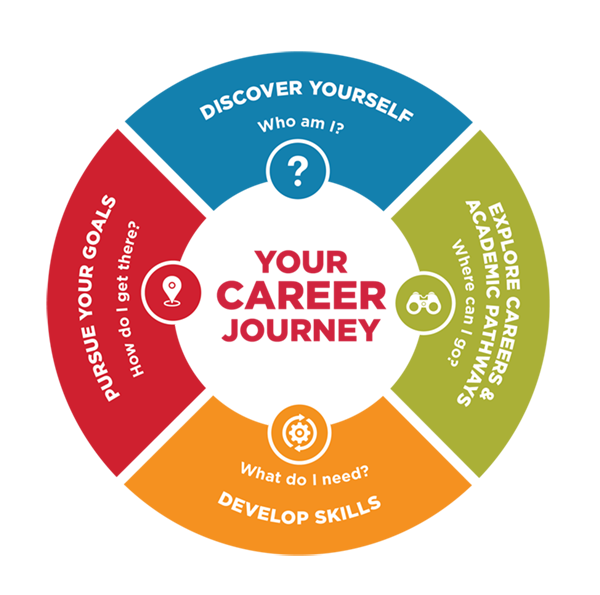
Students revisit these phases throughout their Rutgers experience as their interests and goals change.
Help students recognize, develop, and demonstrate their skills.
 Career & Self-Development
 Communication
 Critical Thinking
 Equity & Inclusion
 Leadership
 Professionalism
 Teamwork
 Technology
Help students connect their interests, strengths, and early Rutgers experiences to academic and career possibilities.

Faculty and first-year course coordinators are partners in bringing career discovery into introductory and transition courses. The plan calls for adapting the FIGS self-discovery content, integrating self-discovery assignments into curricula, and connecting each participating course with a CES staff liaison. Introductory engineering courses and Students in Transition Seminar are examples of these entry points; Canvas learning modules provide another way to embed career exploration into students’ first-year learning.
Academic schools will work with CES to explore broader access to First-Year Interest Group Seminars (FIGS). Admissions, orientation, and advising partners also have a role in introducing discovery resources early, promoting curriculum-mapping tools, and connecting students outside transition courses with the ‘How Do I Even Get Started’ workshops.
CES will adapt presentations and assignments, train facilitators, and develop online training to help campus partners infuse self-discovery into their courses. Expanding FIGS, strengthening its final career project, developing career journey guides, and maintaining contact after the course will help students build on that early foundation.
Students connect their interests, strengths, and experiences to academic and career possibilities early—and revisit those connections as their Rutgers journey develops.
Expand access to alumni and industry professionals through a coordinated range of mentoring experiences.

Academic departments will partner with CES to design one-credit mentoring course sections aligned with their students’ career pathways, with shared learning outcomes and the potential to expand through departmental instructors. The Rutgers University Alumni Association, alumni chapters, employers, and professional networks are partners in building sustained pipelines of mentors and field-experience hosts.
TRIO and other student-support programs will help connect students with 4WARD. Campus partners will also help students use Student-Alumni Career Connect for career conversations. The Career Mentoring Community of Practice will bring mentoring leaders together to share approaches and strengthen coordination across programs.
CES will coordinate mentor recruitment, matching, preparation, and evaluation across a continuum of experiences: 4WARD Career Pathways, the Scarlet Career Mentoring Course, Student-Alumni Career Connect, Intern for a Day, Graduate Student Career Pathways, and Global Careers Mentoring. Industry mentoring pipelines will support these programs collectively, while structured reflection helps students connect mentoring and field experiences to career readiness.
Students gain access to professional relationships, career insight, and field experiences through options ranging from brief career conversations to sustained mentoring.
Build a campus culture in which students recognize, develop, and articulate career readiness across curricular and co-curricular experiences.

Faculty will work with CES and teaching partners through Faculty Career Fellows to connect coursework to the NACE Career Readiness Competencies. Instructors and co-curricular program leaders will incorporate reflection assignments, Canvas resources, and activities that help students explain what they have learned. Experiential education partners will embed this reflection into the experiences they already offer.
Campus employers and student supervisors will help build Student Employee Enrichment by incorporating competencies into job descriptions, feedback, and development conversations. Student organizations will partner on career programming, employer connections, and leadership development, supported by shared training and opportunities to co-sponsor student-led initiatives.
CES will develop Faculty Career Fellows, supervisor training, sample assignments, Canvas learning pathways, and a Career Readiness in Experiential Learning guidebook. Student Employee Enrichment and the Scarlet Careers Leadership Collective extend this work into employment and student leadership. Competency assessment and a planned badging program will help students document their growth.
Students learn to reflect on curricular and co-curricular experiences, connect their learning to career readiness competencies, and articulate evidence of their skills to employers, graduate programs, and other audiences.
Expand access to internships, co-ops, and industry-aligned experiences through stronger campus and employer partnerships.

Academic departments and internship coordinators will share curriculum, credit models, and assessment approaches through the Internship Advisory Council and a proposed internship and co-op community of practice. Departments without an internship course will explore the Rutgers Internship & Co-op Course (RICC) as an option, while participating programs will embed structured career-readiness reflection and contribute to a shared directory of internship courses.
Faculty and campus partners will connect CES with employer relationships and applied-learning needs, including class projects, capstones, simulations, and case competitions. The plan calls for reciprocal employer information sharing, opportunities for partners to meet employers through RecruitED, and exploration of shared tools for internship applications, evaluations, and outcomes tracking.
CES will strengthen RICC and the Rutgers Scarlet Service Internship Program through employer outreach, student preparation, and structured reflection. The Scarlet Careers Incubator adds industry-aligned applied learning. CES will share RICC curriculum, support internship-program development, and connect employers with educational opportunities across campus.
Students gain access to substantive applied learning and learn to explain how their experience develops career readiness, with stronger connections between academic work and professional practice.
Deliver specialized preparation, advising, and connections aligned with students’ interests, aspirations, and circumstances.

Faculty, staff, employers, and student leaders will help shape each career community through advisory boards and community-specific plans. Campus partners will co-develop tailored programs, host advising in locations students already use, and connect student organizations with the community teams whose expertise fits their interests.
Advising offices will work with CES on referrals for students changing majors, schools, or career direction. Transfer Student Deans and CES will review Students in Transition Seminar career content and advising models, while graduate programs and other partners will help adapt resources to their students. These partnerships recognize that students’ career interests extend beyond the boundaries of their majors.
Each career community brings together a Career Success Strategist, an Industry & Campus Connector, an Industry Consultant, and peer support. CES will use this specialized expertise to tailor advising, newsletters, employer engagement, and Industry Connect programming. Community feedback and engagement data will guide improvements, alongside access resources such as The Career Closet and Career Portrait Lounges.
Students find specialized guidance, relevant employers, and professional connections aligned with their interests and circumstances, with clearer referrals when their goals change.
Connect students and recent graduates to employment, graduate education, service, and military pathways that support continued growth.

Academic departments, Graduate Student Admissions, and specialized advising offices will partner with CES on graduate and professional school preparation. Campus partners and student organizations will integrate tailored Handshake job feeds into websites and newsletters, help prepare students for recruiting events, and identify needs for service and gap-year resources through advisory boards.
Employers, alumni, and campus experts will contribute to resume clinics, networking preparation, and workshops on the transition to professional life. Faculty and advisors will connect students with these opportunities and career-management courses. Across the ecosystem, shared outcome information will help identify where students need additional support.
CES will organize career and internship fairs, interview programs, and employer networking and information sessions, alongside preparation for applying, interviewing, and negotiating. Canvas career modules, graduate-school resources, Mastering the Art of Networking, and the Scarlet Careers Bridge Program support students as they pursue employment, further education, service, or military pathways.
Students can move from preparation to a concrete next step, with access to recruiting opportunities and guidance for navigating employment, further education, and other post-graduation pathways.
Roadmap 2030 sets our shared direction. Use the Career Journey Model to connect an experience with student development, and career readiness competencies to help students recognize and explain the skills they build.
Connect participation through We R Career-Ready (#RUCareerReady). Submit resources and events through The Arc; activities marked with career competencies appear in the Challenge.
Scarlet Career Initiatives
Five ways to put our priorities into practice.
Scarlet Career Mentoring Network
Priority 2 · Mentoring relationships that open doors.
Scarlet Careers Leadership Collective
Priority 3 · Career readiness through student leadership.
Scarlet Career Incubator
Priority 4 · Employer partnerships for applied learning.
Scarlet Career Communities
Priority 5 · Specialized guidance for every career interest.
Scarlet Career Bridge Program
Priority 6 · Service and bridge-year pathways.
Building a Career-Ready Campus Together
The six priorities depend on a connected campus career ecosystem. Faculty, advisors, staff, student leaders, alumni, and employers bring distinct expertise; CES connects that work through shared resources and coordinated action.
Our roadmap sets an aspiration of a 90% positive career outcomes rate within six months of graduation by the end of 2030. Achieving it requires collective campus action.
